
In my memory, during the coldest part of winters back home, nightfall often came early. The biting wind swept over the empty fields like knives, swirling dry straw and dust into the air. Yet winter was also a season full of anticipation. During the agricultural off-season, people have more time for joyous events, and weddings were especially plentiful. Whenever there was a happy event in the village—a wedding or the birth of a child, well-off families hosting the celebration would invite a film projection team to set up a snow white screen in the village square, sharing their joy with the entire village.
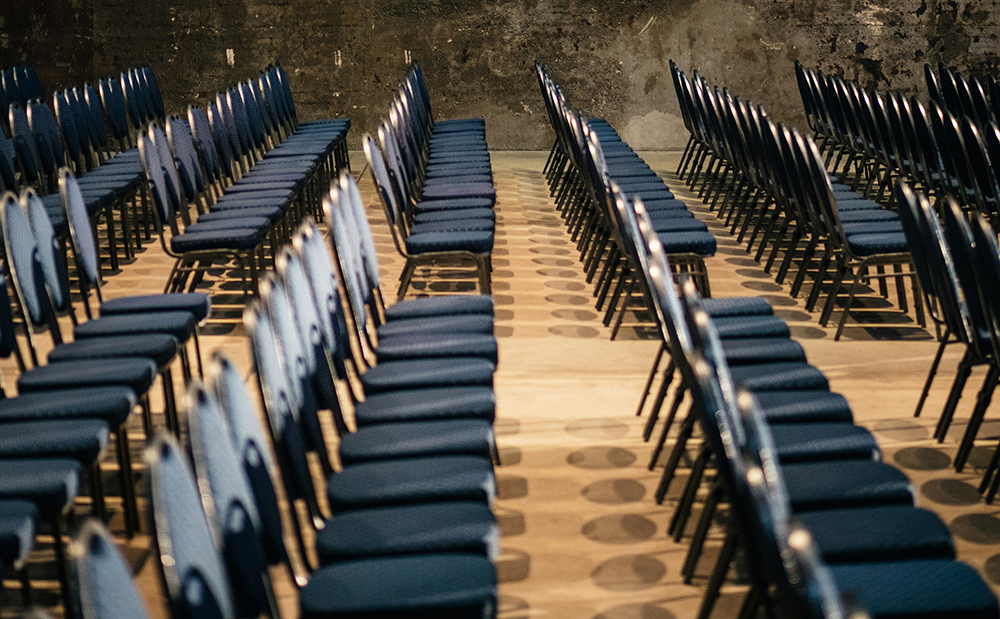
Photo by Jonas Tebbe on Unsplash
That time, the family hosting the wedding was particularly generous and they planned to screen three films in a row. The news came from their niece—my deskmate—who whispered it to us: “The last one is a newly released anti-espionage film. Our favorite!”
Our hearts were instantly ignited. After school, without waiting for the slow-cooked dinner my mother was preparing, I grabbed my stool and rushed toward the village square with my friends. We had to secure the best seats—right in the middle, neither too close nor too far—where every glance and every line of dialogue could be clearly caught.
By the time the first film began, we had already waited in the freezing wind for more than two hours. When we learned that the first two films were an old-style costume drama and a family melodrama, our parents—who had arrived unhurriedly just before the screening—tried to persuade us to go home, have a quick bite, and warm ourselves up. “We will come get you when the second film is almost over,” they promised.
But we shook our heads and refused. Hunger? Unnoticed. Cold? Unfelt. Sleepiness? Impossible! Our excitement was like a little fire, crackling and burning in our hearts. How could we leave? What if we missed the opening of the third film?
The first two films were long. The costume drama with its endless singing and responding tested our patience, and the family drama’s constant chatter acted like the perfect lullaby. As the night grew darker and colder, our toes went numb, like tiny pins prickling them. We were usually asleep by this time, and that night we struggled to keep our eyes open. The occasional whispers gradually faded into complete silence, as our heads became heavy and dizzy, but we resisted falling asleep.
When the old square clock struck eleven, the title of our long-awaited film finally appeared on the screen. By then, however, our sleepiness had become an unstoppable tide, washing away all anticipation, and we were like a clutch of tired little birds that didn’t want to return to the nest, keeping our eyes half-open, our minds half-dreaming.
On the screen, the figures moved and overlapped; gunshots came near and far; the plot scattered like loose beads, impossible to string together. I had no memory of when the film ended and how my mother half-led, half-carried me home. The next day, during class break, none of us could recall a complete sequence of the story.
Though we had seized every advantage—first to hear the news, first to claim the best seats—and were willing to pay the price of hunger and hours in the cold, our efforts yielded little reward. This reminds me of two figures in the Bible who shared the same name—Saul—and both stood in “good positions”, yet with different destinies, forming a striking contrast.
The first Paul, as the first king of Israel, was chosen and anointed by God. He was placed in an honorary position and given “another heart” by the Lord (1 Sameul 10:9). He truly began in an excellent place. Yet, over time, his focus shifted. Out of fear of the people, he offered sacrifices on his own. Out of greed for the spoils, he disobeyed God’s command. He clung to the throne, yet let go of the heart that feared God. In the end, the spirit of God departed from him. His once-glorious position became an empty prison, and his story closed in tragedy on Mount Gilboa.
The other Saul, Paul of Tarsus, walked a very different path. He also began with a position admired by many: as a Jew of pure descent, a Pharisee, and one blameless under the law. But on the road to Damascus, when he encountered Christ, his life was completely transformed and he was called as an apostle to the Gentiles. Yet this new position brought labor, prison, beatings, hunger, and cold (2 Corinthians 11:23-27).
However, Paul understood that the position God gives is not a seat of privilege but a stage for faithfulness. He remained alert and devoted, as a spectacle to the world and the angels, until he could say with confidence: “I have fought a good fight.” (2 Timothy 4:7) A good position, when living out in faithfulness, eventually leads to an eternal crown.
The film we missed as children serves as a quiet metaphor for life. We often think that the key is to “secure a good position”, as if sitting in the right place guarantees a wonderful outcome. Yet sometimes, we hold on to the position, but our hearts grow weary. We grasp the form, but miss the substance.
At the turn of the year, we often find ourselves doing the same. We resolve to read more Scripture, pray more faithfully, and serve more wholeheartedly, as if securing a good seat in the square of a new year could guarantee the harvest for the entire year. Yet as time goes by, weariness quietly sets in. The force of routine is subtle but persistent—we remain where we began, while our hearts drift away and our eyes grow dim, much like the drowsy children before the screen on a winter night.
Looking back, the disappointment of that night is also a warning for the present. The new year ought not to be another cycle of “claiming a place”; rather, it should be a time of “awakening”, to discern whether our spiritual life has grown numb under the weight of routine. It should be a time of “refocusing”, no longer asking “whether I hold a good position”, but “how I am to live faithfully, as a spectacle before the world and the angels”.
And it ought to be a time of response, not excitement over plans, but a quiet prayer to the Director of our lives: “Here I am; send me—into my family, my work, and the ordinary days.”
As children, we missed that film because we mistakenly believed that keeping our seats would let us watch the film we were looking forward to. Similarly, as adults, if we merely chase after the “positions”—more knowledge, higher ministry roles, and brighter titles—while neglecting spiritual alertness and obedience, we might sit through the night in front of the screen of life, only to awaken and find scattered images of light and shadow, unable to form a complete grace story.
Each of our identities is a stage uniquely designed by God; every inner desire that aligns with God’s will becomes a scene set for God to direct. May we not be those who merely occupy a seat and then fall asleep, but those who guard their hearts and remain alert—watching over goals through the long night, glorifying the Lord amid temptation, and remaining faithful in hardships.
After all, life is never a competition for securing seats, but a journey of guarding the heart. The ultimate and unparalleled outcome does not depend on occupying a good position, but on keeping a heart that is fixed on God and living out complete devotion and perpetual alertness in every place entrusted to us.
Author: Liu Lingwei
Translator: Bei Feng



 Home
Home


 Wap
Wap
 APP
APP