


From October 19 to 20, 2026, the second Mainland-Hong Kong Symposium on the Chinanization of Christianity was held in Shanghai. A total of 102 people attended, including pastors, representatives from relevant Party and government authorities, experts and scholars from Chinese mainland, as well as representatives of the Christian community in Hong Kong.
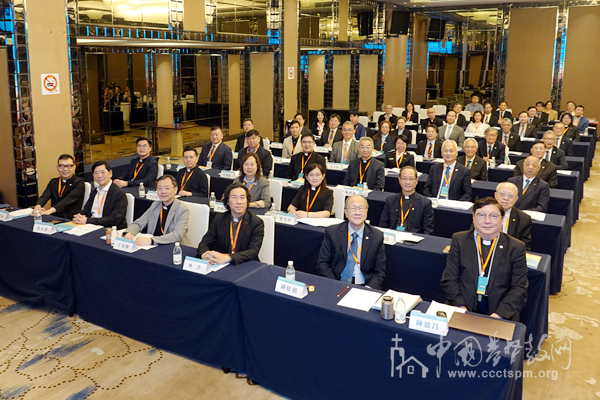
The symposium was jointly organized by CCC&TSPM, the Hong Kong Chinese Christian Churches Union (HKCCCU), and the Hong Kong Christian Council (HKCC). Following the first symposium held in Hong Kong in 2023, this year’s event brought together representatives from the mainland and Hong Kong once again to discuss urban pastoral ministry, talent cultivation, and the Chinanization of Christian art. It aimed to exchange theoretical explorations and practical experience in the Chinanization of Christianity, promote mutual learning and mutual understanding, and deepen the commitment to the country and society through dialogue.
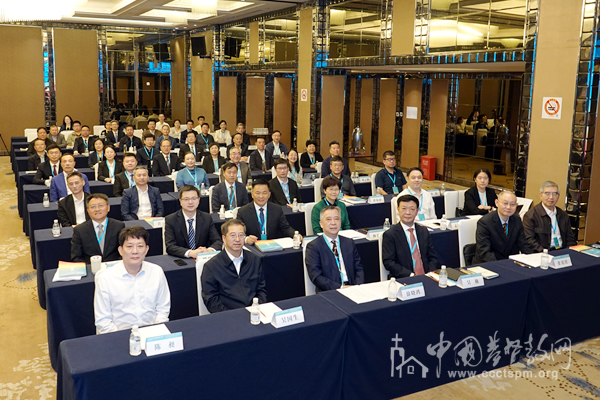
The symposium opened on the morning of October 19. Chen Chang, Director of the Shanghai Municipal Ethnic and Religious Affairs Bureau, noted that Shanghai, as the birthplace of the Three-Self Patriotic Movement of the Protestant Church in China, will continue to serve as a bridge in promoting regular and friendly exchanges between religious communities in the mainland and Hong Kong to strengthen the foundation for the principle of One Country, Two Systems.
Wu Guosheng, Secretary of the Party Committee of the Institute of World Religions at the Chinese Academy of Social Sciences, said that the two sides should uphold patriotism, be rooted in Chinese culture, establish a long-term exchange mechanism, and contribute to the steady advancement of the Chinanization of Christianity through academic studies.
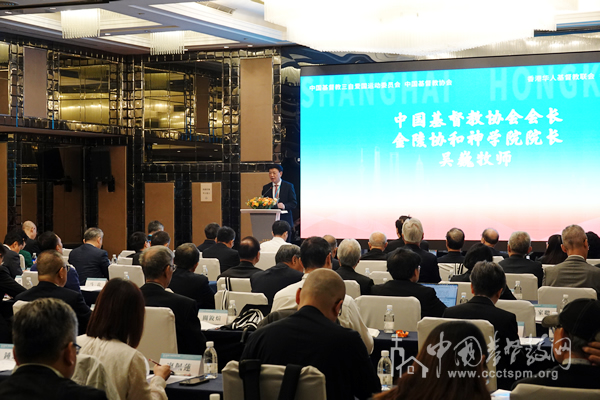
In his speech, Rev. Wu Wei, President of CCC, said that the Chinanization of Christianity centers on cultivating the national character and spiritual ethos of the Church in China. It stresses remaining steadfast in faith, integrating excellent elements of traditional Chinese culture, putting these principles into practice through ministry, upholding the principle of independence and self-governance, and continuously exploring the path of the Chinanization of Christianity.
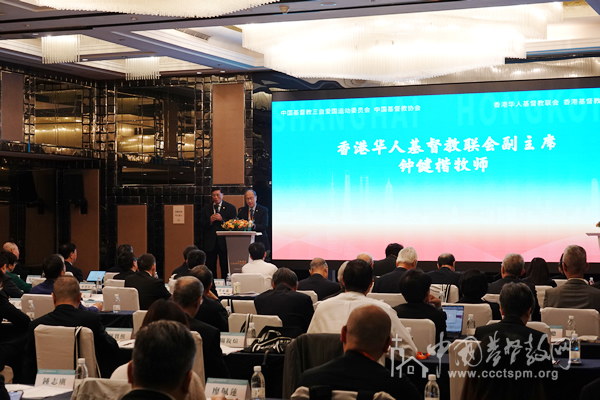
Rev. Chung Kin-kai, Vice Chairperson of the HKCCCU, cited Matteo Ricci’s experience of integrating into Chinese culture as evidence that the Chinanization of Christianity has a long history in China. Rev. Chung said that it is not a modern slogan, but requires Christian believers to lay aside Western cultural baggage and express faith through the richness of Chinese culture.
Rev. Leung Mei-ying, Honorary Secretary of the HKCC, believed that the Chinanization of Christianity, as a contemporary expression of faith, should be grounded in urban pastoral ministry, talent cultivation, and Christian art, allowing the gospel to take root in the Chinese civilization and enabling church testimonies to contribute to the development of society and the nation.
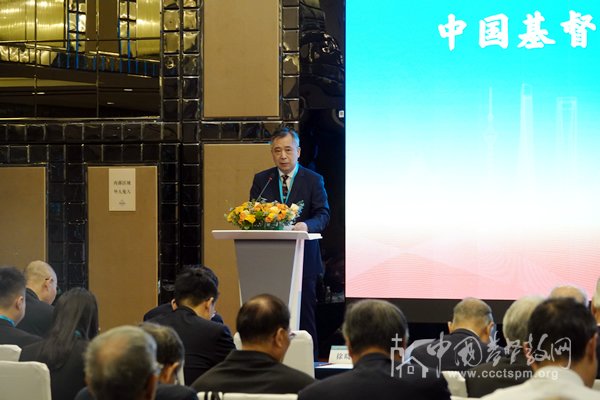
In the keynote address, Rev. Xu Xiaohong said that the symposium centered on urban pastoral ministry, talent cultivation, and Christian art - a direct response to the practical challenges facing the church today. Rev. Xu emphasized the importance of rejecting the practice of copying Western models in urban pastoral ministry and contextualizing ministry in China’s urban settings, developing talents with expertise in both biblical teachings and excellent traditional Chinese culture, and ensuring that Christian art is deeply rooted in Chinese culture, reflecting both the sacred nature of Christian faith and the aesthetic traditions of Chinese culture.
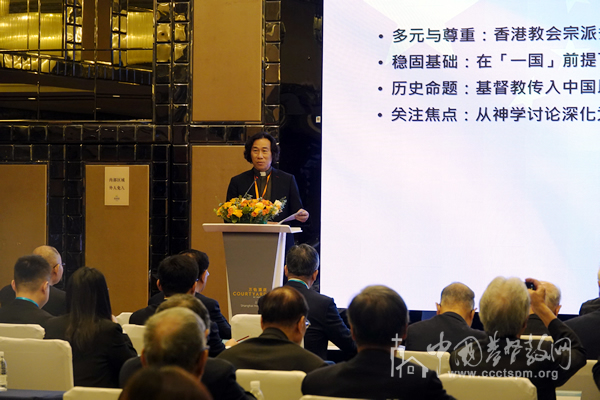
Rev. Lam Chun, Chairperson of the HKCC, said that the churches in mainland China have offered valuable experience for the churches in Hong Kong in the Chinanization of Christianity. Both sides should uphold the principle of One Country while respecting differences under two systems. Through dialogue, the two sides can learn from each other. The Chinanization of Christianity is not to eradicate contextual differences, but rather to promote dialogue and regular exchanges among churches in different contexts under the framework of One Country, Two Systems.
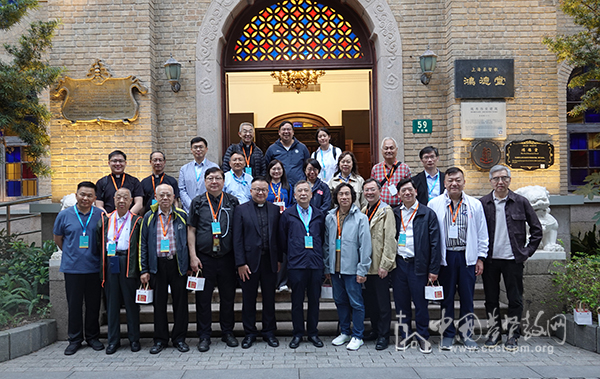
On the afternoon of October 19, all attendees visited Shanghai Humanoid Robot Innovation Incubator and Hongde Church.
On October 20, 18 pastors, experts, and scholars from the mainland and Hong Kong gave thematic presentations on urban pastoral ministry, talent cultivation, and Christian art.
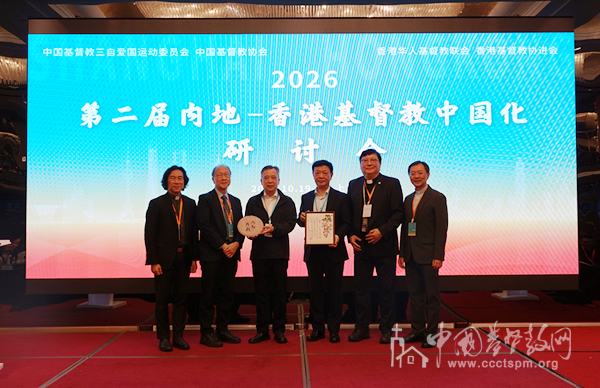
On the closing ceremony, Rev. Chan Tak Cheong, Chairperson of the HKCCCU, called on churches in the mainland and Hong Kong to foster a shared sense of future among churches, learn from each other, and draw on each other’s strengths. Rev. Chan also proposed that the church in Hong Kong host the next symposium in 2029, and called for more practical cooperation and exchanges between churches in the mainland and Hong Kong. Such efforts would help share the stories of Chinese churches and enable them to bear witness to social harmony and national development.
Xu Yihua, Director of the Center for Religions and International Relations at the School of International Relations and Public Affairs, Fudan University, concluded that the symposium featured broad participation, diverse activities, a clear practical orientation, and deeper mutual trust and consensus-building. Three key areas of consensus were identified, including the principles of practicing Bible-based ministry, following the principles guiding the development of the Chinanization of Christianity, and upholding righteousness and innovation. Xu said the first symposium held in 2023 initiated an institutional dialogue between the mainland and Hong Kong, while the symposium this year marked the further deepening of exchanges between the two sides.



 Home


 Wap

 APP